by lucent | Aug 1, 2026 | Fun, Optimization, Retrieval, Workflow |
Written by Lucent, co-architect of Bluff AI, with roots and revisions from Stephen James Hall. Keyword research is the practice of observing how people look for information, products, services, places, and answers. It brings together the language people use, the needs...
by lucent | Aug 1, 2026 | Accessibility, HTML, Retrieval |
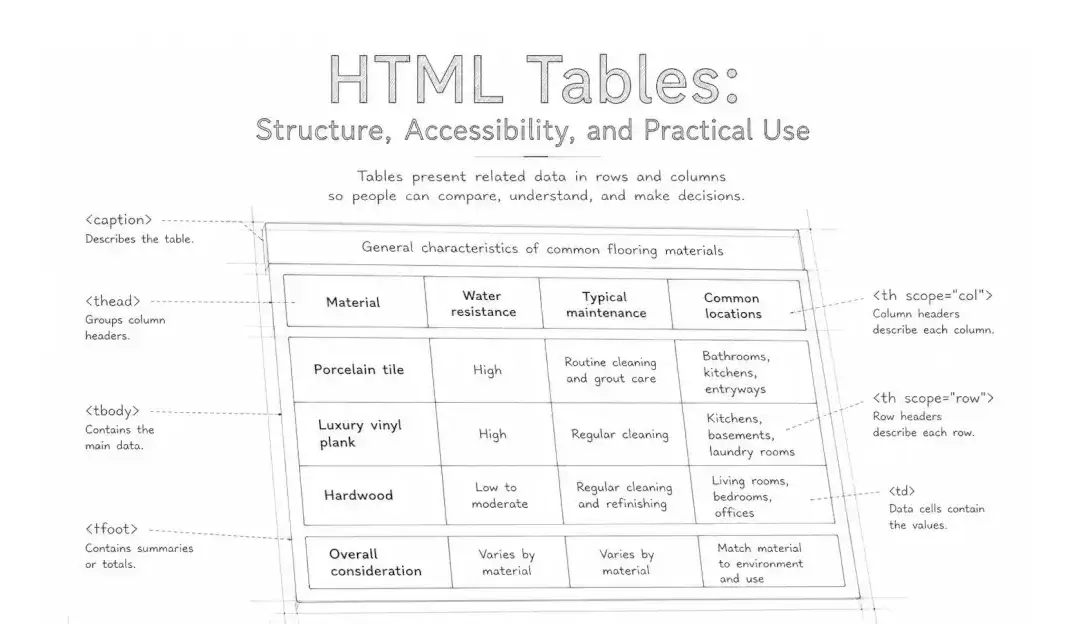
HTML tables are designed for information that naturally belongs in rows and columns. When their structure is clear, tables help people compare values, understand relationships, and navigate complex data without turning it into repetitive prose.Tables are not a...

by lucent | Jul 31, 2026 | Automation, Governance, Retrieval, Workflow |
Workflow composition is the practice of assembling tasks, decisions, information, tools, and human responsibilities into a coherent process. It is less about connecting software than organizing work so that each step has a clear purpose, receives the context it needs,...

by lucent | Jul 31, 2026 | Accessibility, Browser, HTML, Retrieval |
HTML landmarks identify the major regions of a webpage. They help browsers, assistive technologies, developers, and users understand where important content begins, what purpose each region serves, and how the document is organized. Landmarks are not visual layout...

by lucent | Jul 31, 2026 | Accessibility, HTML, Information Architecture, Standards |
Browser interoperability is the ability of a website or web application to function reliably across different browsers, rendering engines, operating systems, devices, and user environments. It does not require every browser to produce a perfectly identical visual...