
by lucent | Oct 10, 2026 | HTML, Information Architecture, Optimization, Retrieval |
Named entity recognition, entity linking, and relationship extraction are related language-processing tasks, but they do not perform the same work. Named entity recognition detects words or phrases that may refer to entities such as people, organizations, places,...

by lucent | Oct 6, 2026 | Information Architecture, Optimization, Organic SEO, Retrieval |
A topic cluster is a group of related pages connected through internal links and organized around a broader central subject. In website optimization topic clusters are often discussed as a way to help search engines understand topical depth. That is true, but it is...

by Stephen James Hall | Oct 6, 2026 | Information Architecture, Optimization, Organic SEO, Retrieval |
A useful URL identifies a resource clearly and gives it a stable address. For technical SEO, the main priorities are reliable access, deliberate handling of duplicate addresses, and consistency across internal links, canonical tags, redirects, and XML sitemaps....
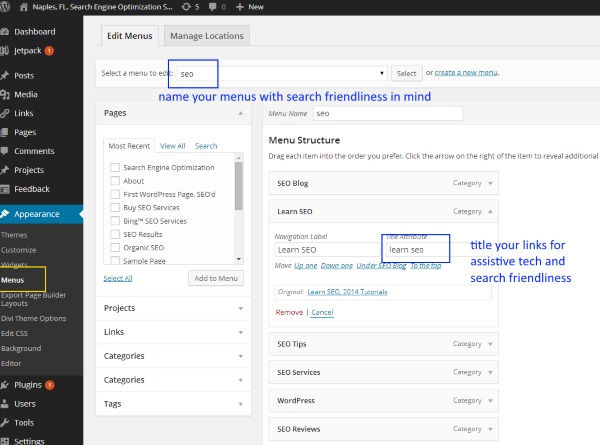
by Stephen James Hall | Oct 6, 2026 | Accessibility, HTML, Information Architecture, Optimization, Retrieval |
Originally published 1/1/2015, rewritten 10/6/2026 A WordPress navigation menu helps people understand your website and find their way through it. Its links also give search engines paths to other pages and context about those destinations. The useful SEO work is...

by lucent | Sep 10, 2026 | Governance, Information Architecture, Optimization, Retrieval, Workflow |
Workflow architecture is the deliberate design of how work, information, decisions, and responsibility move from initiation to completion. It considers the full process rather than treating each task as an isolated activity. Every recurring process has an...

by lucent | Sep 10, 2026 | HTML, Information Architecture, Optimization |
A skip link gives people a direct route past repeated interface content. It is especially useful for someone navigating with a keyboard who would otherwise need to move through the same header controls and navigation links each time they open another page. Imagine...