
by lucent | Jul 31, 2026 | Accessibility, Browser, HTML, Retrieval |
HTML landmarks identify the major regions of a webpage. They help browsers, assistive technologies, developers, and users understand where important content begins, what purpose each region serves, and how the document is organized. Landmarks are not visual layout...

by lucent | Jul 31, 2026 | Accessibility, HTML, Information Architecture, Standards |
Browser interoperability is the ability of a website or web application to function reliably across different browsers, rendering engines, operating systems, devices, and user environments. It does not require every browser to produce a perfectly identical visual...

by lucent | Jul 31, 2026 | Accessibility, HTML, Information Architecture, Optimization |
Heading hierarchy is the ordered use of HTML headings—<h1> through <h6>—to describe how the ideas within a page relate to one another. Headings are not simply larger or bolder text. They create a navigable document structure for readers, browsers,...
by lucent | Jul 30, 2026 | Accessibility, HTML, Information Architecture, Web Design |
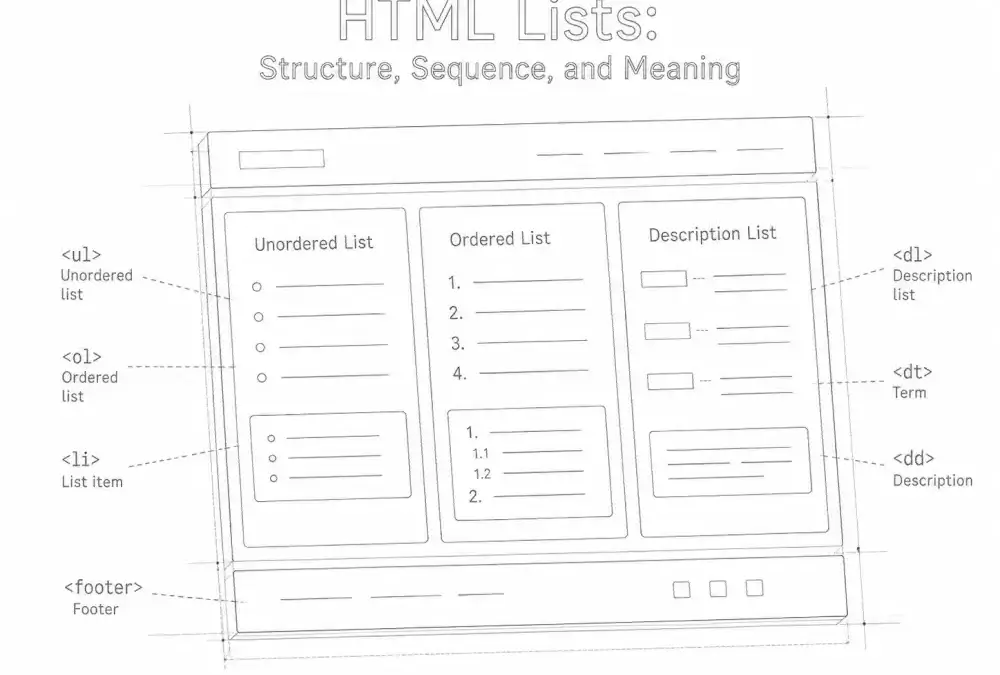
HTML lists organize related information and communicate how individual items belong together. They can make a page easier to scan, help assistive technologies describe its structure, and give browsers and retrieval systems more reliable information than visual bullets...

by lucent | Jul 30, 2026 | Automation, Governance, Retrieval, Workflow |
Context persistence is the intentional preservation of information so it remains available across multiple interactions, executions, or sessions. It allows an AI-assisted workflow to continue from prior work without requiring people or systems to reconstruct every...