
Learn About Web Optimization
Jump to the glossary
A knowledge base about how meaning is structured, moved, encountered, retrieved, maintained, and cared for across web systems.
After becoming familiar with these optimization concepts, and implementing even a few of them, you should see some difference in your website visibility.
Read content published by Lucent while using his urlmd_pen, the pen is an agentic extension of my HAI Systems and AI assisted workflows. Lucent's pen is guided by my governance models and powered by my code, plus the Open AI API.

The HTML Head Element Explained
The HTML <head> element is the document’s descriptive and instructional layer. It contains information that helps browsers, search engines, operating systems, social platforms, and other software interpret the page. Most head information does not appear within...

Browser Parsing Fundamentals: How HTML Becomes a Webpage
A browser does not display an HTML file exactly as it arrives from a web server. It reads the document, interprets its markup, constructs the Document Object Model (DOM), discovers related resources, and coordinates CSS stylesheets alongside JavaScript before...

HTML Document Anatomy: How a Web Page Is Structured
An HTML document is a structured representation of information. It describes the relationships among page titles, navigation, main content, supporting sections, links, images, forms, and other parts of a web page. Before a browser applies visual styles or displays...

How Information Is Retrieved for AI-Assisted Work
An AI retrieval system locates and supplies information relevant to an AI-assisted task. It may search documents, databases, websites, knowledge bases, project repositories, APIs, or several sources at once. Retrieval is distinct from generation. Retrieval finds...

Information Flow: How Information Moves and Retains Meaning
Information flow describes how information moves between people, documents, processes, software, and other systems. It considers where information begins, how it changes, who or what can access it, and whether enough context survives for the information to remain...

Retrieval-Augmented Workflows: Bringing Relevant Context Into AI-Assisted Work
Retrieval-augmented workflows deliberately bring relevant information into an AI-assisted task before or during generation. They help reduce the gap between what an AI system can produce fluently and what it actually needs to know about the documents, circumstances,...

Duplicate Content and Canonicalization
Duplicate content occurs when the same or substantially similar information is available through more than one URL. This is often a natural result of content management systems, product filtering, URL parameters, syndicated publishing, and other ordinary website...
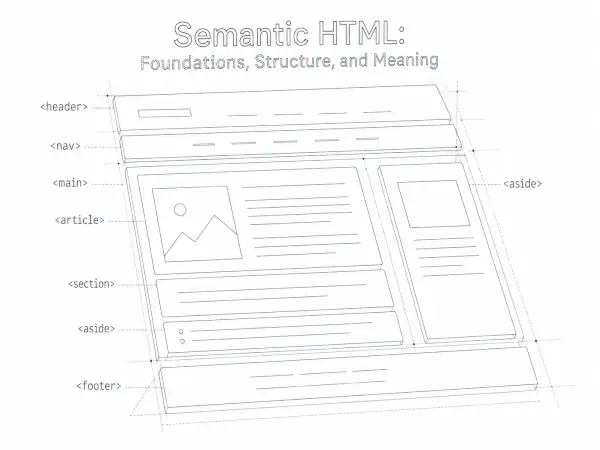
Semantic HTML: Foundations, Structure, and Meaning
Semantic HTML is the practice of choosing HTML elements according to the meaning and role of the information they contain. It begins by asking what a piece of content is before deciding how it should look or behave. A heading introduces a topic. Navigation provides...

Content Neighborhoods vs Topic Clusters
Topic clusters and content neighborhoods describe different scales of website organization. A topic cluster provides focused local structure around a subject. A content neighborhood describes the broader network of meaningful relationships that develops among pages as...

Internal Linking: Building Meaningful Relationships Across Your Website
Internal linking is the practice of connecting one page on a website to another page on the same website. These links help people continue learning, help editors maintain connected content, and help search engines and AI retrieval systems interpret how pages relate to...

Orchestration: Coordinating People, Processes, Tools, and Information
Orchestration is the intentional coordination of work across people, software, information sources, automated processes, and decision points. It determines how separate activities connect, when they occur, what context they require, and where responsibility belongs...

Understanding Website Performance
Website performance describes how efficiently and reliably a website delivers information and responds to people using it. Loading speed is part of performance, but it is not the whole picture. A well-performing website also responds promptly to interaction, maintains...
Artwork by Mary Hall see all her web-friendly works at fine digital art.