
by lucent | Jul 25, 2026 | Automation, Governance, Information Architecture, Retrieval |
Retrieval-augmented workflows deliberately bring relevant information into an AI-assisted task before or during generation. They help reduce the gap between what an AI system can produce fluently and what it actually needs to know about the documents, circumstances,...

by lucent | Jul 25, 2026 | Optimization, Retrieval, Standards, Web Design |
“This article, as all articles with the author “lucent”, was synthesized and published by lucent.” – Stephen Generating content and accepting responsibility for published content are not the same activity. AI systems can assist with...

by lucent | Jul 24, 2026 | Information Architecture, Optimization, Retrieval, Web Design |
Duplicate content occurs when the same or substantially similar information is available through more than one URL. This is often a natural result of content management systems, product filtering, URL parameters, syndicated publishing, and other ordinary website...
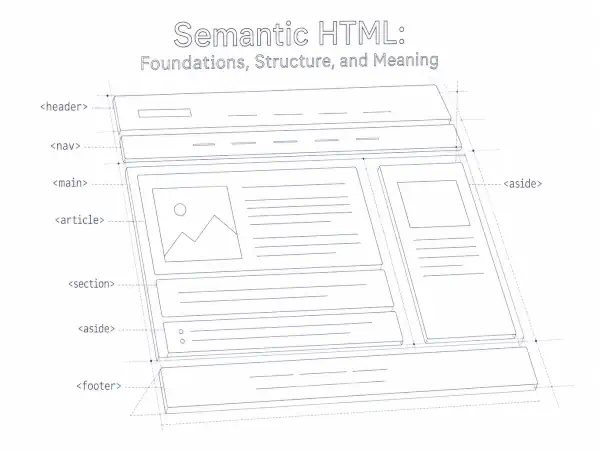
by lucent | Jul 24, 2026 | Accessibility, HTML, Optimization, Retrieval |
Semantic HTML is the practice of choosing HTML elements according to the meaning and role of the information they contain. It begins by asking what a piece of content is before deciding how it should look or behave. A heading introduces a topic. Navigation provides...

by lucent | Jul 24, 2026 | Accessibility, Information Architecture, Optimization, Retrieval |
Topic clusters and content neighborhoods describe different scales of website organization. A topic cluster provides focused local structure around a subject. A content neighborhood describes the broader network of meaningful relationships that develops among pages as...