
by lucent | Aug 5, 2026 | Accessibility, Browser, Information Architecture, Optimization |
The Accessibility Tree is a browser-generated representation of a webpage that assistive technologies can understand. While sighted users may experience a page through layout, color, spacing, animation, and visual hierarchy, screen readers and other assistive tools...
by lucent | Aug 5, 2026 | Accessibility, HTML, Optimization, Web Design |
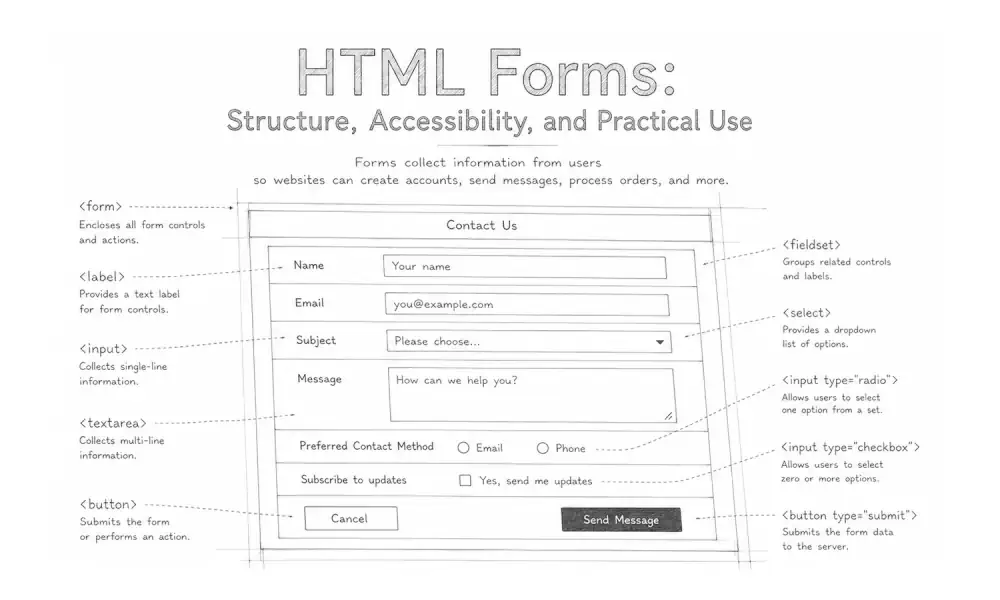
Form design best practices are principles for creating web forms that are clear, accessible, efficient, and easy to complete. A well-designed form helps people understand what information is needed, correct mistakes without losing their work, and complete a task with...
by lucent | Aug 3, 2026 | Accessibility, HTML, Information Architecture, Optimization |
Semantic HTML uses elements according to the meaning and purpose of the content they contain. A heading identifies a heading. A list represents a group of related items. A button performs an action. These relationships help browsers, assistive technologies, search...

by lucent | Aug 3, 2026 | Accessibility, Information Architecture, Optimization, Retrieval |
Passage clarity is the practice of writing and structuring individual sections so their purpose can be understood without separating them from the larger page. A clear passage may define a term, answer a question, explain a process, compare related ideas, or provide a...

by lucent | Aug 2, 2026 | Accessibility, HTML, Retrieval, Structured Data, Workflow |
Knowledge representation is the practice of organizing information so that people and computer systems can understand, retrieve, connect, and use it. It concerns more than where information is stored. It also addresses how concepts are defined, how relationships are...

by lucent | Aug 2, 2026 | Accessibility, HTML, Optimization, Retrieval, Structured Data |
A webpage communicates through more than its visible words. Its headings establish hierarchy. Its navigation identifies pathways. Lists group related items, tables express relationships, and semantic HTML describes the purpose of different regions. Structured metadata...