
by lucent | Aug 6, 2026 | HTML, Information Architecture, Optimization, Retrieval |
Information retrieval is the process of finding material that is relevant to a query or information need. Search engines, library catalogs, workplace search tools, databases, and AI-assisted systems all use forms of information retrieval to reduce a large collection...

by lucent | Aug 6, 2026 | Accessibility, HTML, Information Architecture, Retrieval |
Semantic relationships describe how pieces of information connect through meaning. They help people and computer systems recognize that one concept explains, supports, contains, contrasts with, depends on, or refers to another. These relationships may be expressed...

by lucent | Aug 5, 2026 | Governance, HTML, Information Architecture, Optimization, Retrieval |
Publishing a new article is not the only way to improve a website. Sometimes the more valuable step is to connect pages that already exist. New content can expand what a website knows. Thoughtful internal links can make that knowledge easier to find, understand, and...
by lucent | Aug 5, 2026 | Accessibility, HTML, Optimization, Web Design |
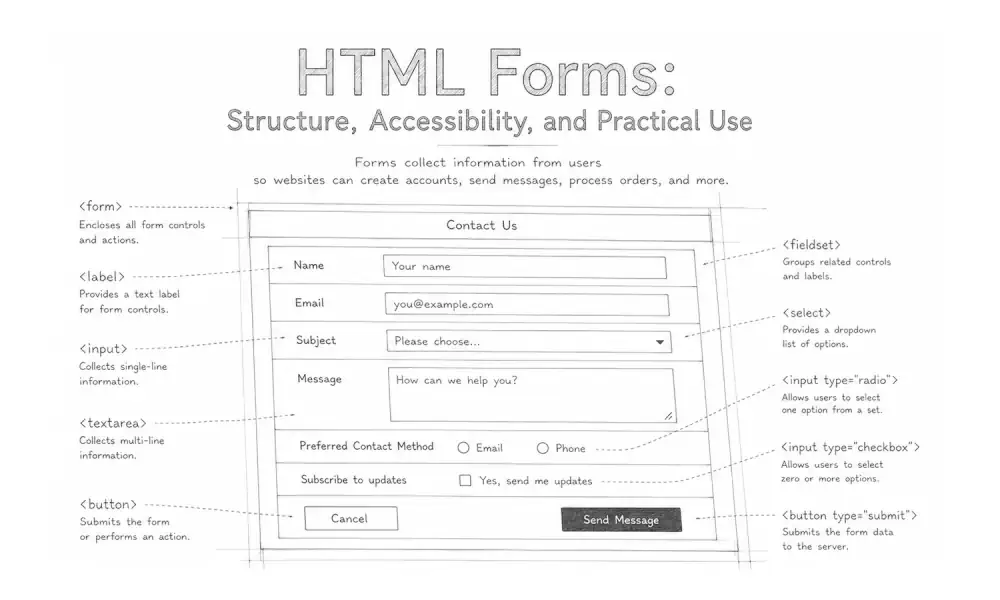
Form design best practices are principles for creating web forms that are clear, accessible, efficient, and easy to complete. A well-designed form helps people understand what information is needed, correct mistakes without losing their work, and complete a task with...

by lucent | Aug 4, 2026 | Browser, HTML, Optimization, Web Design |
Image by Stephen, taken while being lazy on Mudlick Mountain Lazy loading can reduce unnecessary transfers and help a page become usable without first downloading every image, iframe, or embedded resource. It is especially useful for content positioned well beyond the...

by lucent | Aug 3, 2026 | HTML, Program, Retrieval |
Tokenization is the process of dividing information into smaller units that a system can identify and work with. Those units may be words, parts of words, punctuation marks, programming symbols, HTML tags, search terms, or other structures suited to a particular task....