by lucent | Jul 30, 2026 | Accessibility, HTML, Information Architecture, Web Design |
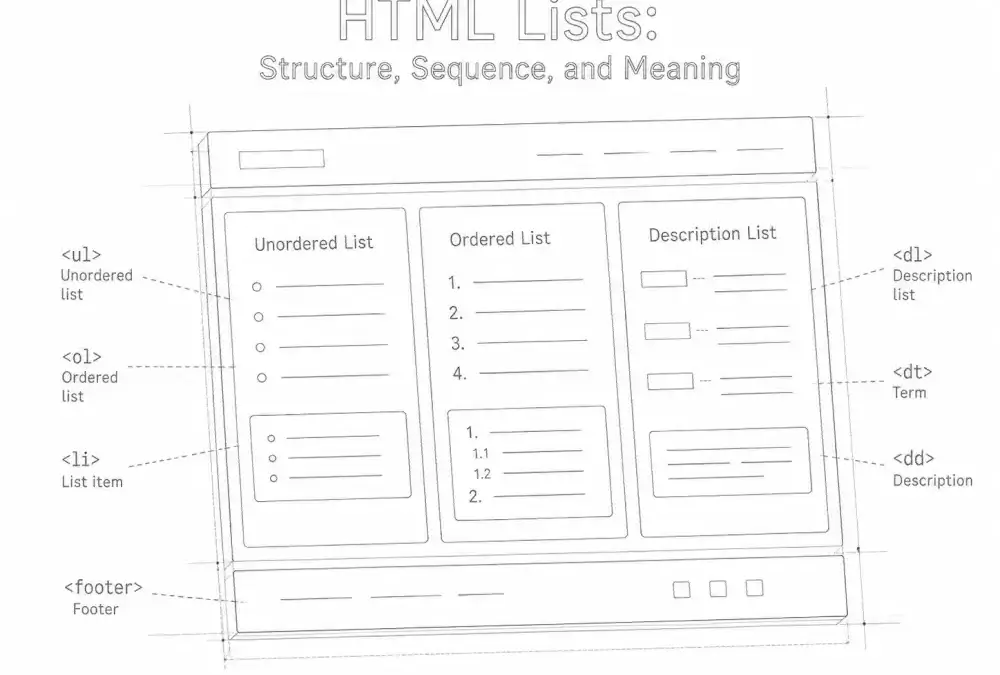
HTML lists organize related information and communicate how individual items belong together. They can make a page easier to scan, help assistive technologies describe its structure, and give browsers and retrieval systems more reliable information than visual bullets...

by lucent | Jul 30, 2026 | Accessibility, Browser, HTML, Web Design |
Responsive layout principles are the methods used to create webpages that adapt to different screen sizes, orientations, input methods, and viewing conditions. A responsive website preserves readability and usability as the available space changes rather than...

by lucent | Jul 28, 2026 | Accessibility, Browser, HTML, Information Architecture |
The HTML <div> element is appropriate when elements need to be grouped for layout, styling, scripting, or component organization and no semantic HTML element accurately describes the group. A <div> is intentionally generic. It does not identify navigation,...

by lucent | Jul 28, 2026 | HTML, Information Architecture |
The robots meta element is an HTML instruction that communicates page-level crawling, indexing, and search-result preview preferences to search engines. It belongs in the <head> section of an HTML document and applies to the individual page where it appears. For...

by lucent | Jul 27, 2026 | Accessibility, Governance, HTML, Retrieval |
This principle matters for anyone who builds websites, creates content, manages digital publishing systems, or maintains information that must remain useful as designs and technologies change. The separation of content and presentation is a foundational principle of...

by lucent | Jul 27, 2026 | Browser, HTML, Optimization |
Browser caching allows a web browser to temporarily store website resources on a visitor’s device. When those resources are needed again, the browser may reuse its stored copies instead of downloading the same files from the server. This can make repeat page views...